
 Image 1 of 3
 Image 2 of 3
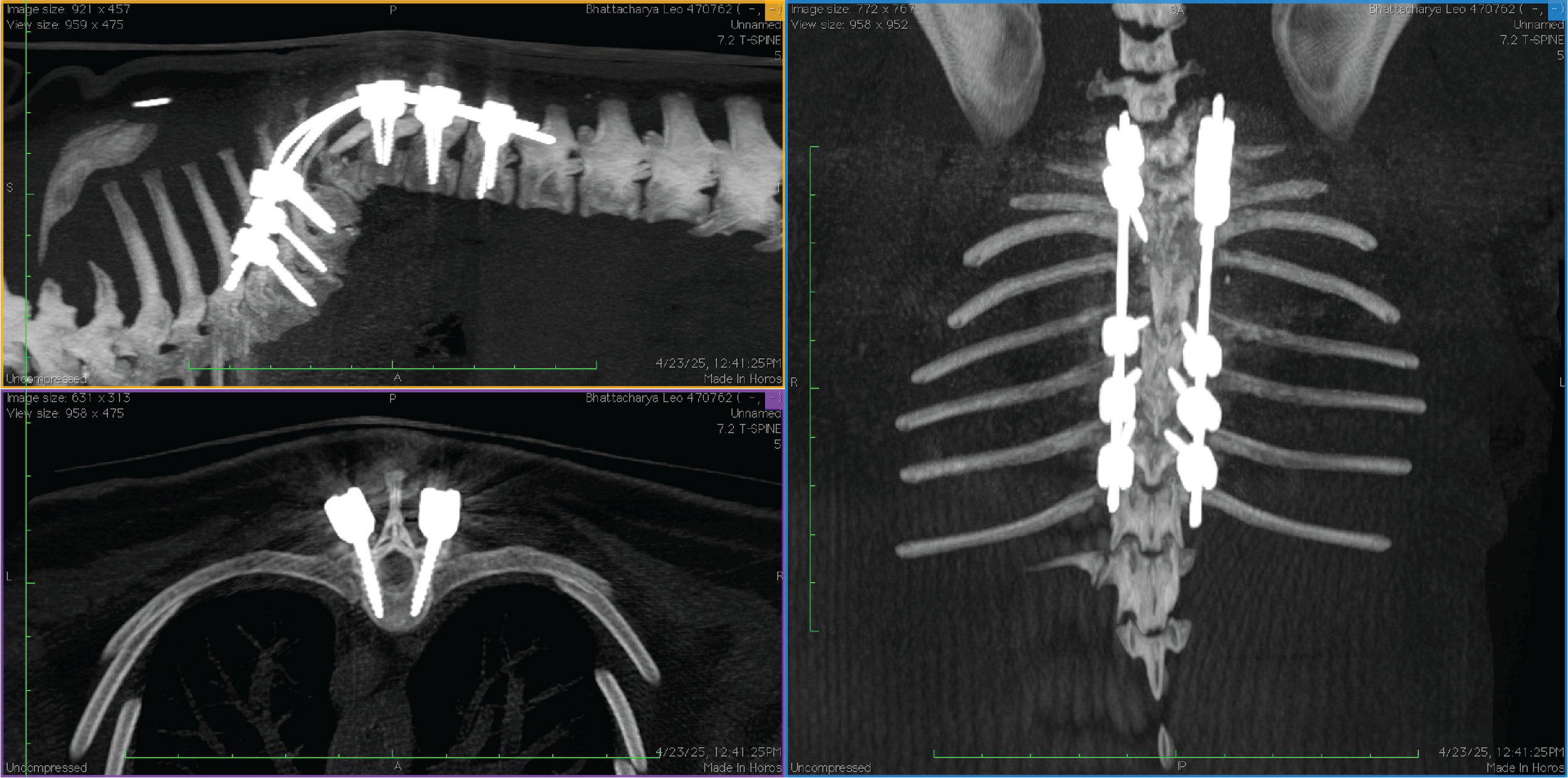 Image 3 of 3
The course is for veterinary neurologists, surgeons and residents in neurology or surgery. The participant will gain knowledge on the fundamental biomechanics of the vertebral column and how to design and use polyaxial screws and rods to create a construct intended to stabilize a portion of the vertebral column. Specifically, the course will cover the thoracic, lumbar and lumbosacral vertebral segments. Attendees will use the laboratory portions of the course to design and build constructs on a 3D printed model of a French Bulldog Vertebral column. Advanced neurosurgeons may choose a Pug model for the high thoracic stabilization of a vertebral column malformation.
LEARNING OBJECTIVES
· Understand the essential biomechanics of the vertebral column.
· Apply biomechanical knowledge into construct engineering to stabilize a segment of the vertebral column (thoracic, lumbar and lumbosacral segments).
· Gain an understanding of specific implant corridors that apply to each spinal segment.
· Understand what specific disease etiologies are possible candidates for spinal stabilization.
· Use actual instruments and implants to create various constructs on a 3D printed model of a French bulldog vertebral column, in three separate lab sessions (thoracic, lumbar and lumbosacral sessions).